



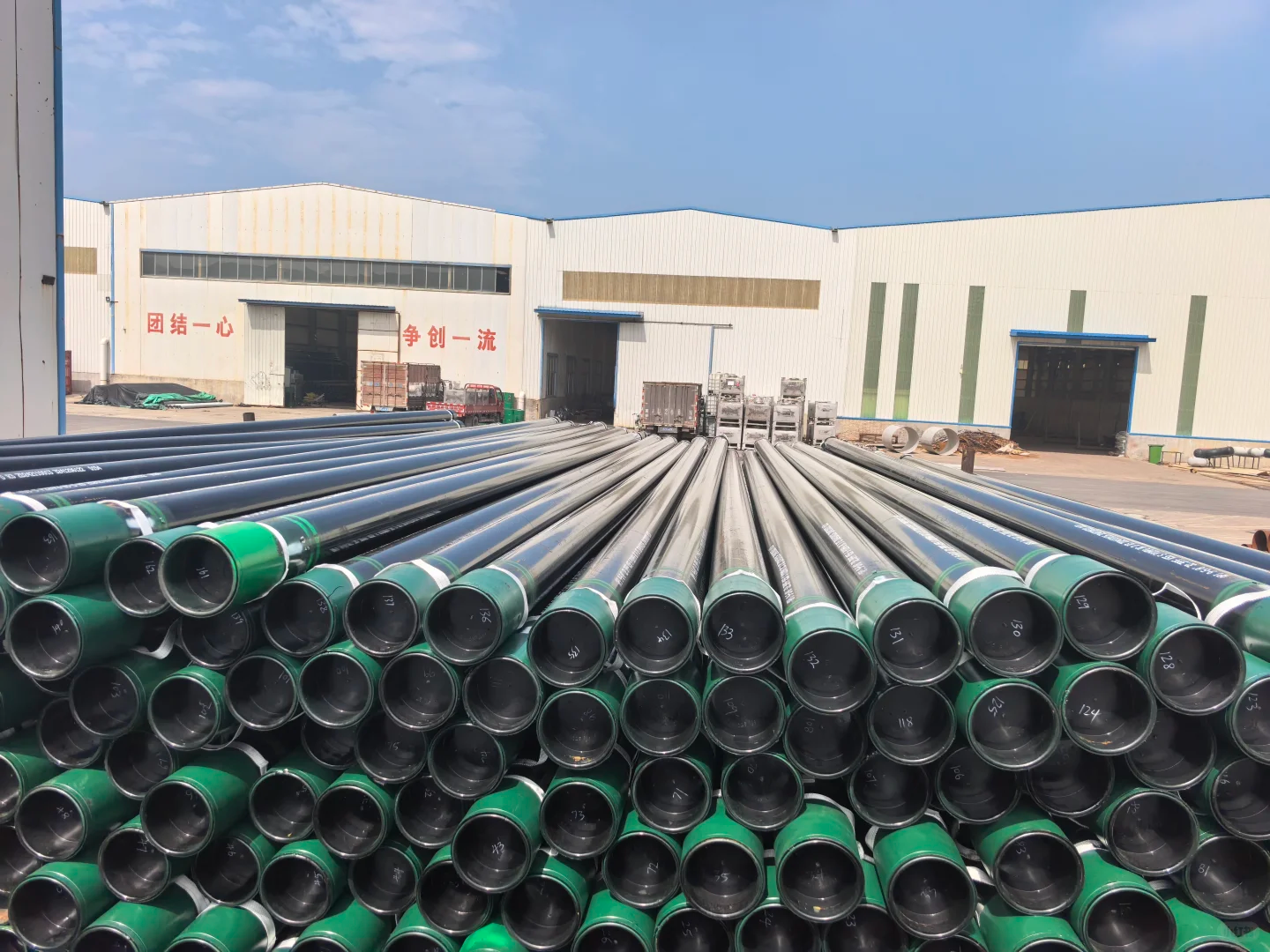
Product introduction
API 5L X65: Mechanical Properties and Chemical Analysis (PSL1 vs. PSL2)
The designation X65 originates from its minimum yield strength of 65,000 psi (448 MPa). The requirements for its PSL2 grade form the basis for ensuring the safe operation of modern high-pressure, large-diameter pipelines.
| Property | PSL1 Requirements | PSL2 Requirements | Key Differences & Importance |
|---|---|---|---|
| Specified Min. Yield Strength (SMYS) | ≥ 65,000 psi (448 MPa) | ≥ 65,000 psi (448 MPa) | Core definition is the same. PSL2 requires verification via stricter testing (e.g., full-wall-thickness tensile tests). |
| Minimum Tensile Strength | ≥ 77,000 psi (531 MPa) | ≥ 77,000 psi (531 MPa) | PSL2 also imposes a maximum tensile strength limit to prevent excessive strength which could compromise ductility. |
| Yield-to-Tensile Ratio (Y/T) | Not Specified | Typically ≤ 0.93 | Core safety control index. Limiting Y/T ensures the pipeline has sufficient plastic deformation capacity upon local yielding, preventing catastrophic brittle fracture. Especially critical for high grades like X65. |
| Elongation | Calculated per formula. | Calculated per formula; actual values are higher. | Measures material ductility. PSL2 exhibits superior ductility due to advanced processing. |
| Impact Toughness | Not Required | Mandatory Requirement | The most fundamental safety difference. PSL2 must pass Charpy V-notch impact tests at specified temperatures (e.g., -10°C, -20°C or lower) to ensure no brittle fracture under low temperature, stress concentration, or dynamic loading. |
| Hardness | No requirement. | Has maximum hardness limits (e.g., HV10 280). | Hardness control ensures weldability and prevents sulfide stress cracking (SSC) in H2S-containing environments. Mandatory for X65. |
| Other | - | DWTT (Drop Weight Tear Test) | PSL2 often requires DWTT to evaluate resistance to ductile fracture propagation, a critical input for crack arrest design in long-distance pipelines. |
Summary: PSL1 X65 only guarantees basic strength, while PSL2 X65 is an "engineering material" integrating high strength, high toughness, good weldability, and crack arrest capability. Any high-pressure trunk line must use PSL2.
To achieve the combination of high strength and toughness, X65 (especially PSL2) employs a typical "Low Carbon Microalloying + TMCP" design.
| Element/Requirement | PSL1 Chemistry (Typical Max. %) | PSL2 Chemistry (Typical Range/Limit %) | Design Philosophy & Role |
|---|---|---|---|
| C (Carbon) | ≤ 0.26 | 0.04 - 0.10 (Ultra-Low Carbon) | Core difference. Ultra-low carbon is the primary prerequisite for achieving high toughness and excellent weldability. Carbon in X65 is typically controlled lower than in X52. |
| Mn (Manganese) | ≤ 1.40 | 1.45 - 1.70 | Primary solid solution strengthening element. PSL2 precisely controls Mn at higher levels for strength, synergizing with C and microalloys. |
| P (Phosphorus) | ≤ 0.030 | ≤ 0.020 (Often ≤ 0.015) | Harmful element. Extremely low P is essential for high toughness. |
| S (Sulfur) | ≤ 0.030 | ≤ 0.005 (Often ≤ 0.002) | Harmful element. Ultra-low S is key for improving transverse impact toughness, HIC resistance, and isotropy. |
| Si (Silicon) | - | ≤ 0.35 | Deoxidizer, provides some solid solution strengthening, but content is controlled to ensure toughness and surface quality. |
| Micro-alloying Elements | Not specified | Nb: 0.04-0.08, V: 0.04-0.08, Ti: 0.01-0.03 | Core technology. Niobium is the primary strengthening element, significantly increasing strength via grain refinement and precipitation hardening without harming toughness. Vanadium and Titanium assist in strengthening and grain control. |
| Carbon Equivalent | No requirement | CE(Pcm) ≤ 0.23 or CE(IIW) ≤ 0.43 | Core weldability indicator. X65 has extremely strict CE requirements, especially the Pcm value (for high-strength steels), to ensure weldability without cracking under harsh construction conditions (e.g., arctic, deep water). |
| Key Process | Conventional hot rolling or normalizing | Thermomechanical Controlled Processing (TMCP) or Accelerated Cooling (HACC) | PSL2 uses TMCP to obtain fine acicular ferrite or bainitic microstructures through controlled rolling and cooling, achieving the optimal balance of strength and toughness. |
Overall Characteristics:
High Strength: Significantly increases operating pressure while maintaining good ductility, reducing wall thickness, and saving material and transportation costs.
High Toughness: Excellent low-temperature impact toughness, suitable for cold regions and harsh environments.
Excellent Weldability: Strict CE control makes it suitable for various automatic welding processes, ensuring field construction quality.
Customizability: Can be tailored via composition/process adjustments to create sour service (X65MS), strain-based design (X65D), and offshore (X65MO) variants.
Typical Applications:
High-pressure, large-diameter oil & gas transmission trunk lines (onshore and shallow water).
Pipelines in environmentally sensitive areas (arctic regions, seismic zones).
Natural gas, crude oil, and product pipelines requiring high transport efficiency.
High-pressure city gas distribution loops.
The Industry Workhorse: API 5L PSL2 X65 is the most technologically mature, widely applied, and economically optimal choice for high-strength steel grade in modern pipeline engineering.
Selection Core: It is imperative to specify the PSL2 grade and focus on key technical indicators: Yield-to-Tensile Ratio, Impact Toughness (CVN & DWTT), Carbon Equivalent (Pcm/IIW), and Sulfur/Phosphorus content.
Process Dependency: X65's performance heavily relies on advanced metallurgical processes (e.g., TMCP). Therefore, selecting a mill with stable and proven production capability is crucial.
Certification Requirements: For critical projects, materials often need to comply with stricter additional standards (e.g., DNV GL, ISO 3183) and require comprehensive third-party type testing and mill certification reports.
Just like you, 70% customers choose long-term cooperation with BBN steel not only for our good product and service quality, good reputation in the international market, but also for our experienced one-stop raw material supply and further steel processing!
Shandong Chengda Steel Co., Ltd.
 Language

 Online Contact Us


