


Product introduction
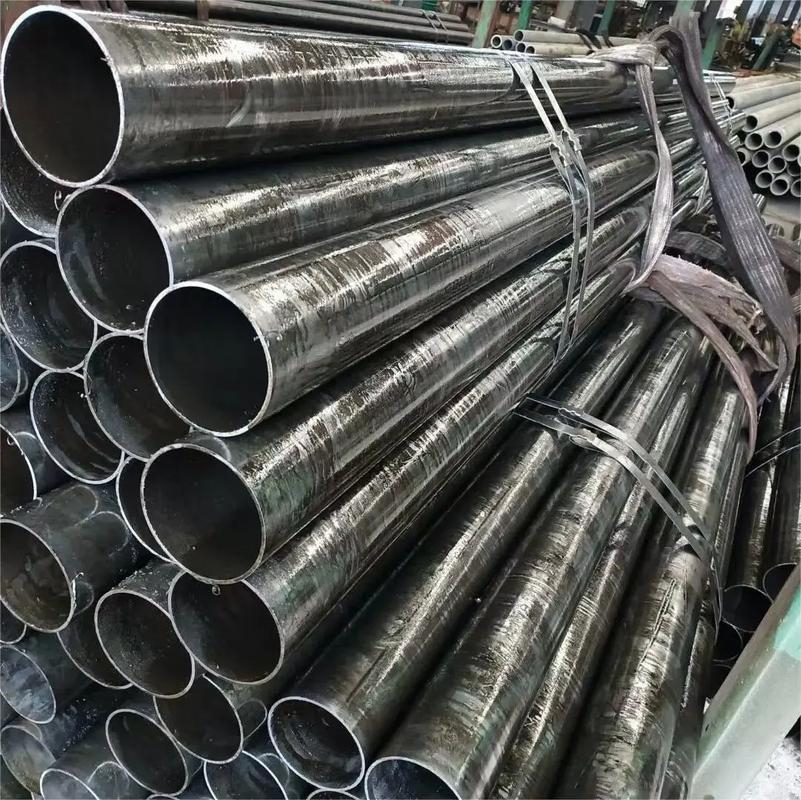
STPA22 is a chromium-molybdenum (Cr-Mo) alloy steel seamless pipe specified in JIS G 3458. It represents a critical class of materials designed for high-temperature and high-pressure service where standard carbon steels (like STPT series) are inadequate.
This grade is internationally recognized and is essentially the Japanese equivalent of the classic "2¼Cr-1Mo" alloy steel, widely known as ASTM A335 P22 or similar designations in other standards. It is a workhorse material in power generation and petrochemical industries.
STPA22 is fundamentally different from the previously discussed STPT grades due to its alloying elements, which impart superior properties for extreme service.
| Characteristic | STPA22 Advantage | Comparison to STPT410 |
|---|---|---|
| Material Type | Low Alloy Steel (Cr-Mo) | Carbon Steel |
| High-Temp Strength | Excellent. Maintains high strength and, crucially, creep resistance at temperatures far exceeding carbon steel limits. | Good up to ~480°C, then strength drops rapidly. |
| Oxidation Resistance | Very Good. The chromium content forms a stable, protective oxide layer (Cr₂O₃), reducing scaling. | Fair. Forms less protective iron oxide (scale) at high temps. |
| Hydrogen Resistance | Good. Resistant to hydrogen embrittlement and hydrogen attack at elevated temperatures, crucial in petrochemical processes. | Poor. Susceptible to hydrogen damage. |
| Maximum Service Temp | Approx. 600°C (1112°F) for sustained service. | Approx. 480°C (896°F). |
| Cost | Significantly Higher (3-5x material cost). | Economical. |
The specific alloy mix is what defines STPA22's capabilities. The composition is tightly controlled per JIS G 3458.
| Element | Content (%) | Role & Effect |
|---|---|---|
| Carbon (C) | 0.05 - 0.15 | Base strength. Kept lower than in carbon steel for better weldability. |
| Chromium (Cr) | 1.90 - 2.60 | Key Alloy. Provides oxidation/corrosion resistance and solid solution strengthening. |
| Molybdenum (Mo) | 0.87 - 1.13 | Key Alloy. Provides tremendous high-temperature strength and creep resistance. |
| Manganese (Mn) | 0.30 - 0.60 | Deoxidizer and strength contributor. |
| Silicon (Si) | 0.50 Max | Deoxidizer. |
| Phosphorus (P) | ≤ 0.030 | Impurity (controlled). |
| Sulfur (S) | ≤ 0.030 | Impurity (controlled). |
STPA22 derives its properties from a precise heat treatment cycle, which is mandatory.
Typical Heat Treatment: Normalizing at ~900-1000°C, followed by Tempering above 675°C.
Resulting Microstructure: Tempered bainite or tempered martensite, providing an optimal balance of strength and toughness.
| Property (Room Temp) | Typical Requirement / Value |
|---|---|
| Tensile Strength | 415 - 585 MPa |
| Yield Strength | ≥ 205 MPa |
| Elongation | ≥ 20% |
STPA22 is specified for the most critical high-energy piping sections in demanding industries.
Application Schematic: The "Hot Section" Specialist
Specific Use Cases:
Power Plants: Main steam lines, hot reheat steam lines, superheater outlet headers, and high-temperature boiler tubes.
Petrochemical: Hydroprocessing units (reactor effluent piping, transfer lines), catalytic crackers, and other processes involving hydrogen and high temperatures (>480°C).
General Industry: Any high-temperature pressure piping system exceeding the safe operating limit of carbon steel.
Working with STPA22 requires specialized procedures due to its alloy nature and tendency to form hard, crack-sensitive microstructures.
Pre-heat & Interpass Temp: Mandatory. Typically 150-250°C to slow cooling rates and prevent hydrogen-induced cracking (HIC).
Post-Weld Heat Treatment (PWHT): Mandatory. Performed at ~700-750°C to:
Temper the hard weld/HAZ microstructure.
Relieve residual stresses.
Optimize corrosion resistance.
Filler Metal: Must match or overmatch the alloy composition (e.g., AWS/ASME SFA 5.5 E8018-B2 or similar).
Quality Control: Requires rigorous procedure qualification records (PQRs) and welder performance qualifications (WPQs).
STPA22 is part of a global material family. Key equivalents include:
ASTM/ASME (USA): A335 P22, A213 T22, A182 F22
DIN/EN (Europe): 10CrMo9-10, 1.7380
GB (China): 12Cr2MoG
STPA22 is not merely a stronger version of STPT pipes; it is a fundamentally different alloy steel engineered for severe high-temperature and high-pressure environments. Its chromium-molybdenum composition provides the necessary creep strength, oxidation resistance, and microstructural stability that carbon steel cannot offer. Its use marks a critical step up in plant design, signifying sections of the process where temperature, pressure, and reliability demands are paramount. Proper specification, fabrication, and heat treatment are essential to realizing its full performance potential.
Just like you, 70% customers choose long-term cooperation with BBN steel not only for our good product and service quality, good reputation in the international market, but also for our experienced one-stop raw material supply and further steel processing!
Shandong Chengda Steel Co., Ltd.
 Language

 Online Contact Us


