


Product introduction
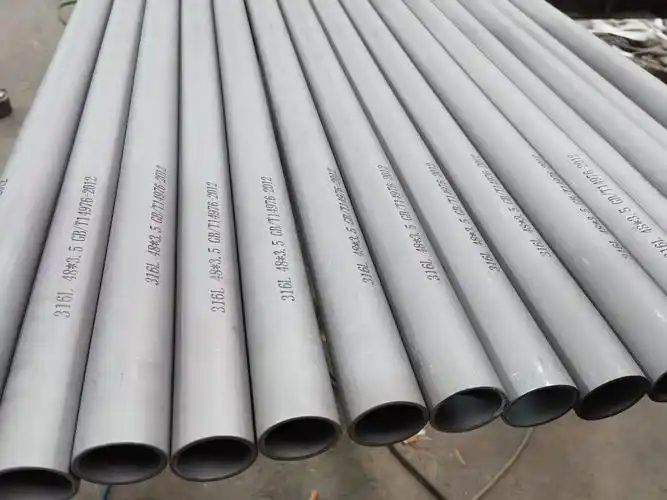
316L (UNS S31603) is a low-carbon variant of the molybdenum-bearing austenitic stainless steel 316. It is one of the most widely used "marine-grade" stainless steels, offering superior corrosion resistance, particularly against chlorides and other industrial solvents. The "L" denotes low carbon content (≤ 0.03%), which minimizes carbide precipitation during welding, thereby preventing susceptibility to intergranular corrosion in the heat-affected zone (HAZ).
This chromium-nickel-molybdenum alloy is non-magnetic in the annealed condition and exhibits excellent formability, weldability, and toughness across a wide temperature range, making it indispensable for demanding applications in chemical processing, marine, and medical industries.
| Element | Composition (% by weight) | Role in Material Properties |
|---|---|---|
| Chromium (Cr) | 16.0 – 18.0 | Forms a passive oxide layer for corrosion resistance; essential for stainless property. |
| Nickel (Ni) | 10.0 – 14.0 | Stabilizes the austenitic structure, enhances ductility, toughness, and resistance to reducing acids. |
| Molybdenum (Mo) | 2.0 – 3.0 | Key differentiator. Dramatically increases resistance to pitting & crevice corrosion, especially by chlorides. |
| Carbon (C) | ≤ 0.030 (Max) | "L" = Low Carbon. Minimizes chromium carbide formation during welding, preventing weld decay. |
| Manganese (Mn) | ≤ 2.0 | Austenite stabilizer, aids in hot workability. |
| Silicon (Si) | ≤ 0.75 | Deoxidizer during steelmaking, improves oxidation resistance. |
| Phosphorus (P) | ≤ 0.045 | Impurity, kept low to maintain toughness. |
| Sulfur (S) | ≤ 0.030 | Impurity, improves machinability but can reduce corrosion resistance. |
| Iron (Fe) | Balance | Base metal. |
| Nitrogen (N) | ≤ 0.10 | Strengthens austenite, can improve pitting resistance. |
*Note: 316L has a Pitting Resistance Equivalent Number (PREN) of ~25-28 (PREN = %Cr + 3.3×%Mo + 16×%N), indicating good resistance to localized corrosion.*
| Property | Value (Imperial) | Value (Metric) | Test Standard |
|---|---|---|---|
| Tensile Strength, min | 70,000 psi | 485 MPa | ASTM A240 / A276 |
| Yield Strength (0.2% Offset), min | 25,000 psi | 170 MPa | ASTM A240 / A276 |
| Elongation in 2" (50 mm), min | 40 % | 40 % | ASTM A240 / A276 |
| Hardness (Brinell), max | 217 HB | 217 HB | ASTM E10 |
| Hardness (Rockwell B), max | 95 HRB | 95 HRB | ASTM E18 |
| Modulus of Elasticity | 28.0 x 10⁶ psi | 193 GPa | - |
| Density | 0.29 lb/in³ | 8.00 g/cm³ | - |
| Melting Range | 2,500 – 2,550 °F | 1,370 – 1,400 °C | - |
Note on Strength at Temperature:
316L retains strength better than carbon steels at elevated temperatures.
It begins to lose strength significantly above ~1500°F (815°C) and is susceptible to carbide precipitation in the range 800–1500°F (427–816°C), which can reduce corrosion resistance.
The addition of Molybdenum (Mo) is the critical factor. It provides a major boost in resistance to:
Pitting and Crevice Corrosion: Essential for saltwater (marine), chloride, and halide environments.
Organic Acids: Like acetic and formic acid.
Sulfuric Acid: At moderate concentrations and temperatures.
For Welded Fabrications: The low carbon content prevents sensitization (chromium carbide formation at grain boundaries) during welding, eliminating the need for post-weld annealing in most cases. This is its primary advantage.
| Industry | Specific Applications | Reason for Use |
|---|---|---|
| Chemical & Petrochemical | Reactors, pressure vessels, heat exchangers, piping, valves, pumps. | Resists a wide range of chemicals, acids, and chlorides. |
| Marine & Offshore | Boat fittings, propeller shafts, deck hardware, desalination plant components, seawater piping. | Superior resistance to saltwater pitting and crevice corrosion. |
| Pharmaceutical & Food | Processing tanks, piping, valves, brewing equipment, hygienic surfaces. | Excellent cleanability, corrosion resistance, and non-contaminating properties. |
| Medical & Biomedical | Surgical instruments, orthopedic implants (often further surface-treated), MRI scanner components. | Biocompatibility, corrosion resistance in bodily fluids, non-magnetic when annealed. |
| Architectural (Coastal) | Facades, railings, fasteners in aggressive or coastal environments. | Aesthetic appeal combined with long-term durability against atmospheric chlorides. |
| Pulp & Paper | Digester, bleach plant, and liquor handling equipment. | Resists corrosive sulfur compounds and chlorides used in processing. |
| Process | Guidelines for 316L |
|---|---|
| Welding | Excellent weldability. Common methods: TIG, MIG, SMAW, SAW. Use 316L or 317L filler metal. Post-weld annealing is generally not required due to low carbon content. |
| Machining | Tougher to machine than carbon steel. Use positive rake angles, rigid setups, powerful machinery, and generous coolant/lubrication. Carbide tools are recommended. |
| Forming | Excellent cold workability due to high ductility. It work-hardens rapidly, so higher forces and intermediate annealing may be needed for severe forming. |
| Heat Treatment | Annealing: Heat to 1900-2050°F (1040-1120°C), then rapidly quench in water or air to retain carbon in solution and maintain corrosion resistance. Cannot be hardened by heat treatment. |
| Forging | Forge at 2100-2300°F (1150-1260°C). Do not forge below 1700°F (925°C). Re-anneal after hot working. |
| Environment / Agent | Resistance Rating | Notes |
|---|---|---|
| Atmospheric (Rural/Urban) | Excellent | - |
| Marine Atmosphere | Very Good to Excellent | Superior to 304/L. |
| Fresh Water | Excellent | - |
| Seawater (Stagnant) | Good | Susceptible to crevice corrosion. Cathodic protection is often used. |
| Dilute Sulfuric Acid | Good | Better than 304/L. |
| Phosphoric Acid | Excellent | - |
| Acetic Acid | Excellent | - |
| Organic Acids (Citric, Tartaric) | Excellent | - |
| Sodium Hydroxide (Caustic Soda) | Good | Resists a wide range of concentrations. |
| Chloride Solutions | Good | Best among standard austenitics, but not immune to stress corrosion cracking (SCC) in hot, concentrated chlorides. |
Key Limitation: Chloride Stress Corrosion Cracking (CSCC): 316L is susceptible to cracking in the presence of tensile stress, chlorides, and temperatures above ~140°F (60°C). Design must mitigate stress and chloride exposure.
| Property | 316L | 316 | 304L | Duplex 2205 |
|---|---|---|---|---|
| Key Feature | Low-C, Mo-bearing | Standard Mo-bearing | Basic Low-C grade | Duplex (Austenite-Ferrite) |
| C (max) | 0.030% | 0.08% | 0.030% | 0.030% |
| Mo Content | 2-3% | 2-3% | - | 3% |
| PREN (approx.) | 25-28 | 24-27 | 18-20 | 35-40 |
| Y.S. (min, annealed) | 25 ksi (170 MPa) | 30 ksi (205 MPa) | 25 ksi (170 MPa) | 65 ksi (450 MPa) |
| Resistance to Weld Decay | Excellent | Fair (can sensitize) | Excellent | Good (but requires care) |
| Resistance to CSCC | Moderate | Moderate | Poor | Excellent |
| Relative Cost | Medium-High | Medium | Low | High |
Plate, Sheet, & Strip: ASTM A240, ASTM A480
Bar & Wire: ASTM A276, ASTM A479
Pipe & Tube: ASTM A312 (seamless/welded pipe), ASTM A269 (tubing)
Fittings & Flanges: ASTM A403 (forgings), ASME B16.5, B16.9
Forgings: ASTM A182
Castings: ASTM A351 (CF3M - cast equivalent)
Specify ASTM/ASME SA-240 316L when you require:
Superior corrosion resistance, especially against pitting from chlorides.
A component that will be welded, and you want to ensure the heat-affected zone remains corrosion-resistant without post-weld heat treatment.
Good mechanical properties and formability combined with excellent hygiene and cleanability (food, pharma).
A cost-effective solution for moderately aggressive environments where higher alloys (like duplex or super-austenitics) are not justified.
It is not the solution for highly oxidizing acids (like nitric) or for applications involving hot, concentrated chlorides under tensile stress.
Just like you, 70% customers choose long-term cooperation with BBN steel not only for our good product and service quality, good reputation in the international market, but also for our experienced one-stop raw material supply and further steel processing!
Shandong Chengda Steel Co., Ltd.
 Language

 Online Contact Us


